Source Grip Sweat Absorbent Football Sock for Soccer, Running, Training
Find 30 verified listings for Grip Sweat Absorbent Football Sock options featuring breathable knitted materials and custom logo services. Buyers can compare MOQs ranging from 5 to 1000 pairs, sizes for adults and kids, and lead times across manufacturers in China.
Key considerations
Products List
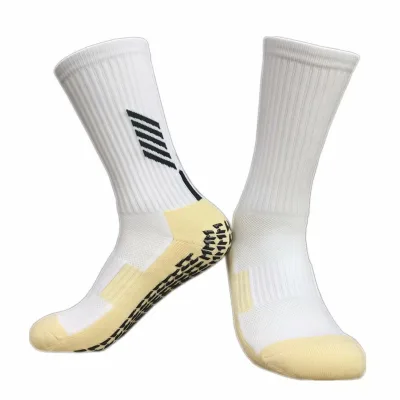
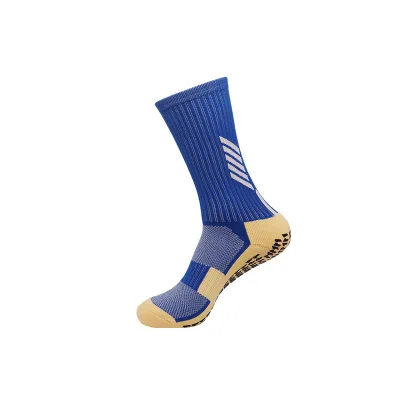
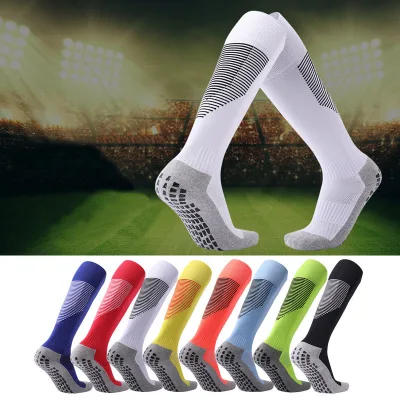
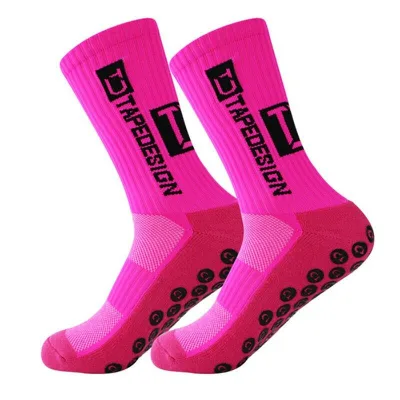


Customized Football Socks, Competition Training Grip Strength Sports Socks
$2.00 - $3.50
MOQ: 100 pairs


Men's Silicone Non Slip Football Socks Custom Training Sports Grip Soccer Socks
$0.35 - $1.75
MOQ: 100 Pairs

Breathable Men Short Football Running Sock Cotton Ankle Soccer Sports Socks
$1.35 - $1.95
MOQ: 300 Pairs
Comprehensive Sourcing Guide
Strategic Sourcing Guide for Grip Sweat-Absorbent Football Socks
Understanding Technical Specifications and Material Composition
When sourcing grip sweat-absorbent football socks, the primary objective is to identify products that balance moisture management with structural integrity during high-intensity athletic performance. The core keyword implies a need for socks that remain secure on the foot while wicking away perspiration to prevent blisters and slippage. Based on available market data, the material composition for these items typically involves a blend of synthetic fibers. Common formulations observed in the sector include Spandex and Nylon, or a tri-blend of Cotton, Nylon, and Elastane. The inclusion of Spandex or Elastane is critical for providing the necessary compression and elasticity that allows the sock to maintain a "grip" fit without restricting blood flow.
The construction technique is predominantly knitted, which facilitates the creation of specific zones for breathability and cushioning. Buyers should verify the thickness specification, as football socks often require a "Normal" to "Thick" profile to offer adequate protection against cleat impact and ground friction. The height of the sock is another vital technical parameter; options range from Ankle and Middle cuts to Knee Socks, with the latter being the traditional standard for professional football to ensure the sock stays up and covers the shin guard area. The product style may also include features like leg warmers, though the primary function remains the protection and grip of the foot and lower leg.
A critical technical observation is the presence of anti-slip features. These are often integrated into the sole or heel area to prevent the foot from sliding inside the boot, which can lead to injury. The "Comprehensive Protection" attribute suggests that the socks are designed to shield the foot from abrasion and impact. When evaluating technical specifications, procurement teams must look for model numbers such as CF20013 or 5101, which often denote specific design iterations. The size specifications vary significantly, with some listings offering adult and kids sizes, while others provide a "One Size" option. It is essential to confirm that the size chart aligns with the target demographic, as a "Universal" or "Adult" designation does not guarantee a fit for all body types without specific measurement data.
Compliance, Certification, and Safety Verification
In the B2B procurement of athletic wear, compliance and safety are non-negotiable, particularly for products intended for contact sports like football. While specific certification documents are not universally listed for every supplier, buyers must verify that the manufacturing process adheres to rigorous safety standards. One specific attribute observed in the supply chain is "Needle detection: Yes." This indicates that the factory employs metal detection technology to ensure no broken needles or metal fragments remain within the finished product, a critical safety measure for children's and adult athletic wear.
Buyers should also inquire about the origin of the materials. The primary production hubs for these items are located in Jiangsu and Zhejiang, China. These regions are known for their textile manufacturing capabilities, but the specific environmental and labor standards of the factory must be confirmed. Although "Certifications" are not explicitly detailed in the general product attributes, the presence of "OEM/ODM" capabilities suggests that suppliers are accustomed to meeting the specific compliance requirements of international brands. This often includes adherence to REACH regulations regarding chemical substances and ISO standards for quality management, though these must be requested directly from the supplier rather than assumed.
Furthermore, the "Customized design" and "Custom Logo" options imply that the supplier must have the capacity to apply branding without compromising the structural integrity or safety of the sock. The application of logos on the "Custom" position must be done using methods that do not introduce allergens or reduce the breathability of the fabric. Buyers should request a declaration of conformity for the specific batch they intend to purchase, ensuring that the dyes and fibers used meet the safety thresholds of the destination market. The "Small Orders: Accepted" attribute suggests flexibility, but it does not negate the need for a formal compliance audit for large-scale production runs.
Cost Drivers and Pricing Dynamics
The pricing of grip sweat-absorbent football socks is influenced by several variable factors, primarily material costs, order volume, and customization requirements. The observed price range in the market spans from $0.35 to $20.00 USD per unit. This wide disparity is not indicative of a single product tier but rather reflects the spectrum from basic unbranded inventory to high-performance, custom-engineered athletic gear. The lower end of the range typically corresponds to standard "Normal" thickness socks with minimal customization, while the higher end likely includes "Thick" cushioning, specialized grip technologies, and complex OEM branding.
Minimum Order Quantity (MOQ) is a significant driver of unit cost. The market data shows an MOQ range from 5 pairs to 1,000 pairs, with a common threshold of 10 to 20 pairs for initial trials. Suppliers often offer a "Sample Time" of 3-5 days for standard items and 7-10 days for custom designs. The ability to accept "Small Orders" allows buyers to test the market with lower financial risk, but the unit price for these smaller quantities will naturally be higher due to the fixed costs of setup and production. Conversely, larger orders can leverage economies of scale to reduce the per-unit cost, potentially bringing the price closer to the lower end of the observed range.
Additional cost factors include the complexity of the design and the number of colors. With "11 colors available," suppliers may charge a premium for multi-color runs or specific Pantone matches. The packaging also impacts cost; while "1 pairs/OPP bag" is a standard low-cost option, more elaborate packaging for retail presentation will increase the final landed cost. The "Single gross weight" of 0.07 kg to 0.200 kg per unit also influences shipping costs, which can be a substantial portion of the total procurement budget for international buyers. Buyers must balance the desire for customization and quality against the budget constraints imposed by these variable cost drivers.
Typical Applications and Performance Context
The versatility of grip sweat-absorbent football socks extends beyond the pitch, making them suitable for a wide array of athletic activities. The "Activity" attribute lists Basketball, Running, Soccer, Cycling, Outdoor Sports, Tennis, and Volleyball. This broad applicability suggests that the core technology—moisture wicking and anti-slip grip—is transferable across different sports that demand high foot stability and comfort. For football specifically, the "Occasion: Football" designation highlights their primary use case, where the sock must withstand the rotational forces and impact of the sport.
The "Season" attributes of Spring, Autumn, and Spring Autumn indicate that these socks are designed for moderate temperatures. They are likely not intended for extreme winter conditions, where a thicker, insulated liner would be required, nor for extreme summer heat where a ultra-light mesh might be preferred. The "Breathable" feature is crucial for these seasons, allowing heat to escape while maintaining the structural grip. The "Anti-slip" and "Sports" features are particularly relevant for activities involving sudden stops and starts, such as soccer and basketball, where foot slippage inside the shoe can lead to ankle injuries.
For the "Applicable People: Universal" and "Age Group: Adults" categories, the design must accommodate a wide range of foot shapes and sizes. The "One Size" option suggests a stretchable design that fits a broad demographic, while the "Adult/Kids" specification indicates that manufacturers produce specific sizing for younger athletes. The "Leg warmers" style option points to a niche application where additional warmth or compression is needed, perhaps for pre-game warm-ups or cooler weather training sessions. Understanding these application contexts helps buyers select the right product for their specific end-users, whether they are professional clubs, retail chains, or recreational leagues.
Supplier Evaluation and Production Capabilities
Evaluating a supplier for football socks requires a deep dive into their production capabilities and flexibility. The "Supply Type: Make To Order" indicates that many suppliers operate on a demand-driven model rather than holding massive finished goods inventory. This approach ensures that the product is tailored to the buyer's specifications but requires careful management of lead times. The "Sample Time" of 3-5 days for standard items and 7-10 days for custom designs provides a benchmark for the speed of the prototyping phase. Buyers should verify if these timelines are consistent with their project schedules.
The "Brand Name" options, including "Alfino" or "OEM," suggest that suppliers are capable of both private labeling and producing under their own brand. The "Customized design" and "Custom Logo" capabilities are essential for buyers looking to create a unique brand identity. However, the "Logo position: Custom" attribute requires clear communication to ensure the branding is placed correctly and does not interfere with the functional aspects of the sock, such as the grip zones. The "Needle detection: Yes" attribute is a strong indicator of a mature manufacturing process, suggesting that the supplier has the infrastructure to handle safety-critical production.
Buyers should also consider the "Available Quantity" of 10,000 units as a baseline for production capacity. While this number may seem modest for large-scale global brands, it is significant for mid-sized retailers or niche markets. The "Single package size" of 5x5x5 cm to 27x8x1.5 cm indicates that packaging can vary significantly based on the product type, which affects logistics planning. A supplier that can accommodate both small, compact packaging for individual units and larger packaging for bulk shipments offers greater logistical flexibility. The "Place of Origin" in Jiangsu and Zhejiang, China, is a standard for textile manufacturing, but buyers should verify the specific factory's capacity to handle their volume requirements without compromising quality.
Quality Control and Long-Term Procurement Strategy
Ensuring consistent quality in football sock procurement requires a robust quality control (QC) strategy. The "Feature" list includes "Breathable, Anti-slip, Sports, Knitted," which are the key performance indicators that must be verified during the QC process. Buyers should implement a sampling plan that tests the elasticity of the Spandex/Nylon blend to ensure the "grip" does not degrade after multiple washes. The "Thickness" specification, whether "Normal" or "Thick," must be measured to ensure it meets the comfort and protection standards required for the intended activity.
Long-term procurement considerations involve building a relationship with a supplier who can scale with the buyer's growth. The "Small Orders: Accepted" policy is a positive sign of supplier flexibility, but it is crucial to establish clear terms for scaling up to larger volumes. The "Customized design" capability should be leveraged to create a unique product line that differentiates the buyer in the market. However, the "Model Number" variations (e.g., CF20013, 5101) suggest that different designs may have different lead times and cost structures, requiring careful inventory management.
Buyers must also consider the "Single gross weight" and "Single package size" for logistics optimization. A supplier that offers consistent packaging dimensions can reduce shipping costs and improve warehouse efficiency. The "Color" availability of 11 options provides a good range for seasonal collections, but buyers should verify colorfastness to ensure the "Solid" pattern type does not fade or bleed during use. Finally, the "Sample" availability allows for a physical verification of the "Comprehensive Protection" and "Anti-slip" claims before committing to a large order. By combining these quality checks with a strategic approach to supplier evaluation, buyers can secure a reliable supply of high-performance football socks that meet the demands of the modern athletic market.
FAQs
What materials are used for grip sweat absorbent football socks?
These socks typically use a blend of Spandex and Nylon or Cotton, Nylon, and Elastane. This composition ensures the necessary compression and elasticity for a secure grip fit while wicking away moisture to prevent blisters during high-intensity play.
How long does it take to receive samples for custom designs?
Sample time ranges from 3 to 5 days for standard items and 7 to 10 days for custom designs. This timeline allows buyers to verify quality and fit before committing to larger production runs under the Make To Order supply type.
Which minimum order quantities are accepted for these socks?
Minimum order quantities vary from 5 to 1000 pairs, with common thresholds at 10 or 20 pairs. Suppliers often accept small orders to reduce financial risk, though unit prices may be higher compared to bulk purchases.
Can buyers customize the logo position on the socks?
Yes, the logo position is fully customizable to meet specific branding requirements. Suppliers offer OEM and ODM services, allowing for unique designs while ensuring the branding does not compromise the structural integrity or breathability of the fabric.
What safety measures are in place for needle detection?
Manufacturers employ needle detection technology to ensure no metal fragments remain in the finished product. This safety measure is critical for athletic wear, protecting both adult and children athletes from potential injury during use.
How does the thickness of the socks affect performance?
Thickness ranges from Normal to Thick profiles to offer adequate protection against cleat impact. Thicker options provide better cushioning for high-intensity sports, while normal thickness suits moderate activity levels in spring and autumn seasons.
What is the price range for these football socks?
The observed price range spans from 0.35 to 20 USD per unit. This variation reflects differences in material quality, thickness, customization complexity, and order volume, with lower prices typically corresponding to standard unbranded inventory.